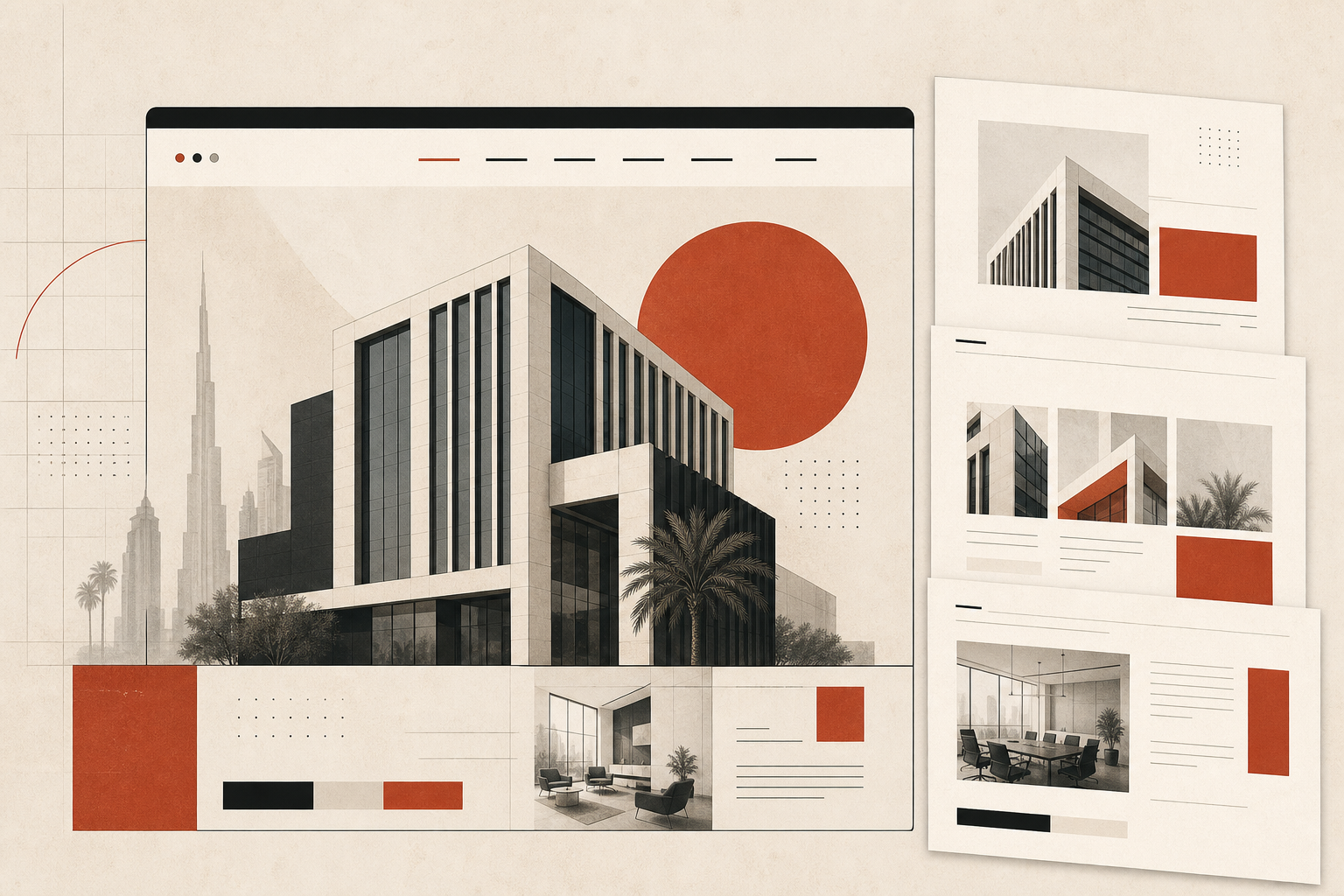
Service Overview
Corporate website design goes beyond visual polish. It requires a deliberate information architecture that guides visitors through your services, leadership, credentials, and contact pathways without overwhelming them. We begin by mapping the roles your site must fulfil — credibility builder, lead generator, recruitment portal, or investor resource — and let those priorities shape every layout decision.
Each page is designed within a cohesive template system so that new sections can be added without breaking visual consistency. Navigation is structured for clarity at every depth level, with primary pathways surfaced prominently and secondary content accessible without clutter. The result is a site that feels intentional from the homepage through to the deepest inner page.
We work with organisations that need their digital presence to reflect the same professionalism they deliver in person. Whether you are launching a new corporate identity online or replacing an outdated platform, the focus remains on building a durable foundation that supports content updates, regional expansion, and evolving business priorities.
Who This Is For
This service suits organisations that require a structured, multi-section web presence rather than a single promotional page. Typical clients include established companies, professional services firms, holding groups, and B2B enterprises that need to present layered information to distinct audience segments.
- Companies replacing an outdated corporate site with a modern, scalable platform
- Organisations entering new markets and needing a credible digital headquarters
- Professional services firms presenting teams, case studies, and expertise areas
- Groups with multiple divisions requiring unified branding and clear section hierarchy
- Businesses preparing for growth that anticipate adding pages, services, or locations
What's Included
Every corporate website engagement includes the structural and visual components needed for a complete, launch-ready platform. Scope is tailored to your page count and content requirements, but the deliverables below represent the standard foundation.
Information Architecture
Sitemap planning, navigation hierarchy, and page relationship mapping to ensure visitors reach key content efficiently.
Template System
Reusable page layouts for services, team profiles, case studies, news, and contact — consistent yet flexible.
Responsive Layouts
Every page engineered for desktop, tablet, and mobile viewports with tested breakpoints and readable typography.
Content Zones
Defined areas for headlines, body copy, imagery, calls-to-action, and supplementary modules that your team can update.
Our Approach
We start with discovery — understanding your organisation's structure, audience segments, and the actions you want visitors to take. This informs the sitemap and wireframe phase, where page layouts are sketched before any visual styling begins. Stakeholder feedback is gathered at this stage so structural decisions are confirmed early, reducing costly revisions later.
Visual design follows the approved wireframes, applying your brand identity across headers, footers, content blocks, and interactive elements. We prioritise readability, accessible contrast ratios, and a visual rhythm that carries through every section of the site. Development-ready files or front-end implementation can be included depending on your project scope.
- Discovery session to define goals, audiences, and content inventory
- Sitemap and wireframe approval before visual design begins
- Two structured revision rounds at the design stage
- Cross-browser and cross-device review prior to handoff or launch
- Organised asset delivery with naming conventions and layout documentation
Deliverables
- Approved sitemap and information architecture document
- Wireframes for all primary and secondary page templates
- High-fidelity visual designs for desktop and mobile breakpoints
- Design system summary covering typography, colour, spacing, and component rules
- Exported assets optimised for web delivery
- Style guide or component reference for future page additions
- Front-end code or developer handoff package (when included in scope)